Today I completed guiding my first of three “Wilderness Adventures” for a local summer camp, spending three nights in the Pigeon River State Forest. My 11 campers were between 13 and 15 years of age, from all over Michigan, and a couple from out of state. One of the things that I love about guiding these trips is hearing the kids’ reactions to various sights we encounter–the things they notice that I may have passed by, and the things that are new to them.
We began our outdoor experience at camp, practicing for the real thing by tenting out for two nights, and engaging in some team building activities. The kids got a chance to challenge themselves on the camp’s high ropes course and zipline. We also talked about Leave No Trace Principles, fitting and packing a backpack, and other backpacker realities, like filtering water, hanging bear bags, and digging a cat hole. We took some practice hikes with our loaded packs around the camp’s 100 acre property and made adjustments as needed. Then it was off to the Pigeon River State Forest to hike the Shingle Mill Pathway, and some other smaller loops, so the kids could experience dispersed camping.
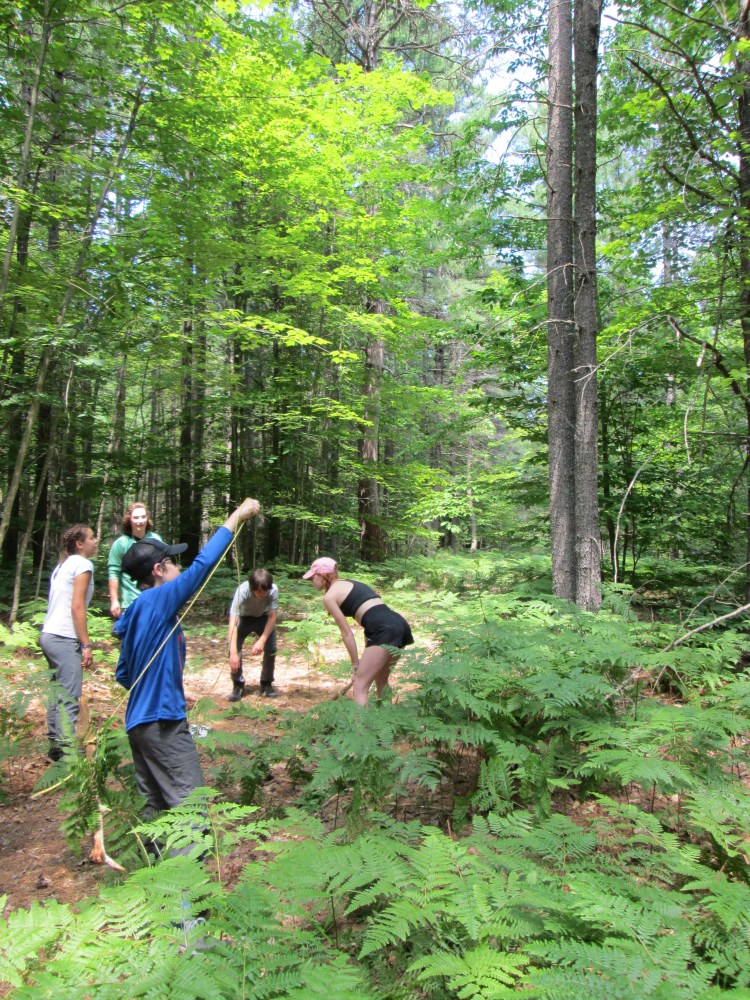
Team effort hanging a bear bag.
Our first stop in the Pigeon River State Forest was the Discovery Center–a cool mix of taxidermy and information about wildlife, the region’s history, and efforts to preserve and restore the area’s biodiversity. An Americorp volunteer gave us a tour of the center, which is housed in the log home of the former forest supervisor. Many other log buildings populate the landscape. Later in our trip we were able to hike back to the Discovery Center for a presentation from a NASA ambassador about the new Webb telescope.
After our tour of the Discovery Center, we took advantage of the picnic tables to eat lunch, and the large yard to dry out our tents, which were wet from the previous night’s downpour. Another quick lesson for the kids: It’s worth the time to unpack a wet tent on a warm sunny day–they dry in no time! Then it was time to start backpacking.
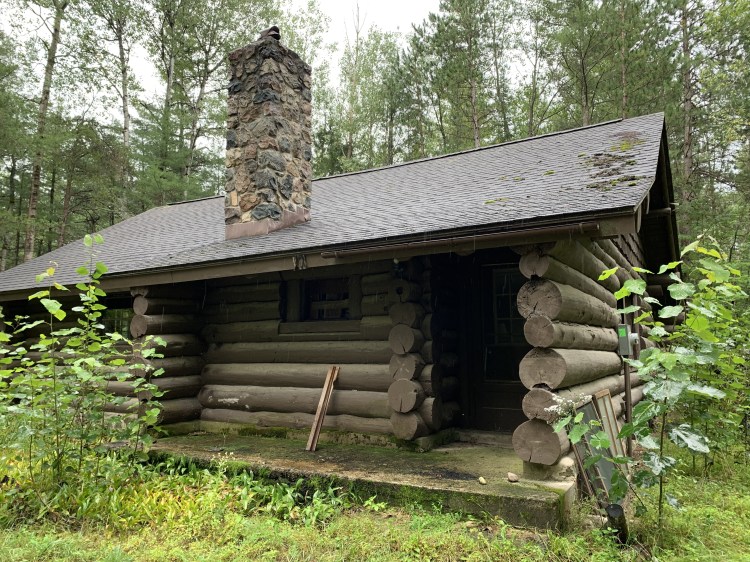
One of many historic buildings near the Pigeon River Discovery Center.
The 107,000+ acre Pigeon River State Forest is also known as “The Big Wild.” Ernest Hemingway praised this pine barrens as “the best I’ve ever been in.” However, we were starting small, so we hiked a stretch along the Towerman’s Watch trail in order to find a location to dispersed camp. After setting up camp and teaching the campers how to hang a bear bag, we took a day hike to complete the 3.3 mile loop. I had joked with the campers that this would be a lesson in managing expectations, as the fire watch tower no longer exists, except for a few little plastic flags marking its foundation posts, and a piece of lumber noting the location, written in Sharpie marker.
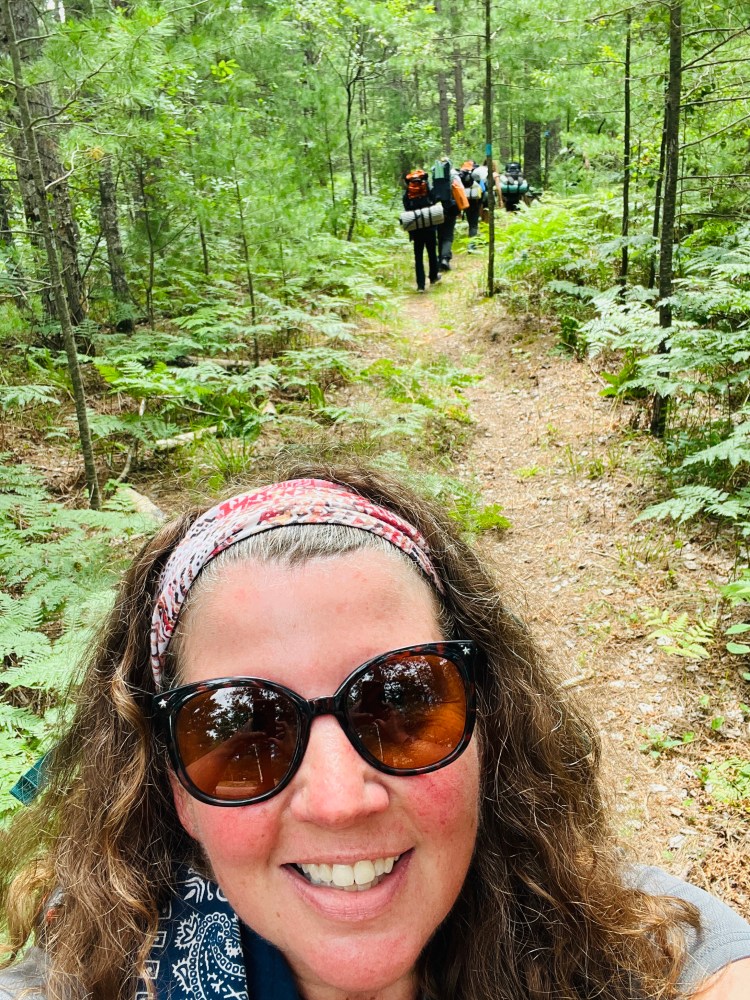
Campers setting off on the Towerman’s Watch trail.
The real hero of the Towerman’s Watch trail is the Witness Tree, used to “witness” the boundary when Michigan’s land was being plotted long ago. At the Discovery Center, we had learned that this giant tree had been in danger of being cut down in order to make a straighter path for a road, but in the end, the tree was saved. Decades later, the road has faded away, but the tree remains.
After our hike, I reminded the kids to conduct “tick checks” and we began our tick count with 16, on 13 people, but none had begun to attach. (By the end of our hike, our tick count was at 48, but I only had to use a tick key on three. I had sprayed my clothes with Permethrin in advance, and had none. Campers’ parents had been advised to do the same treatment.)

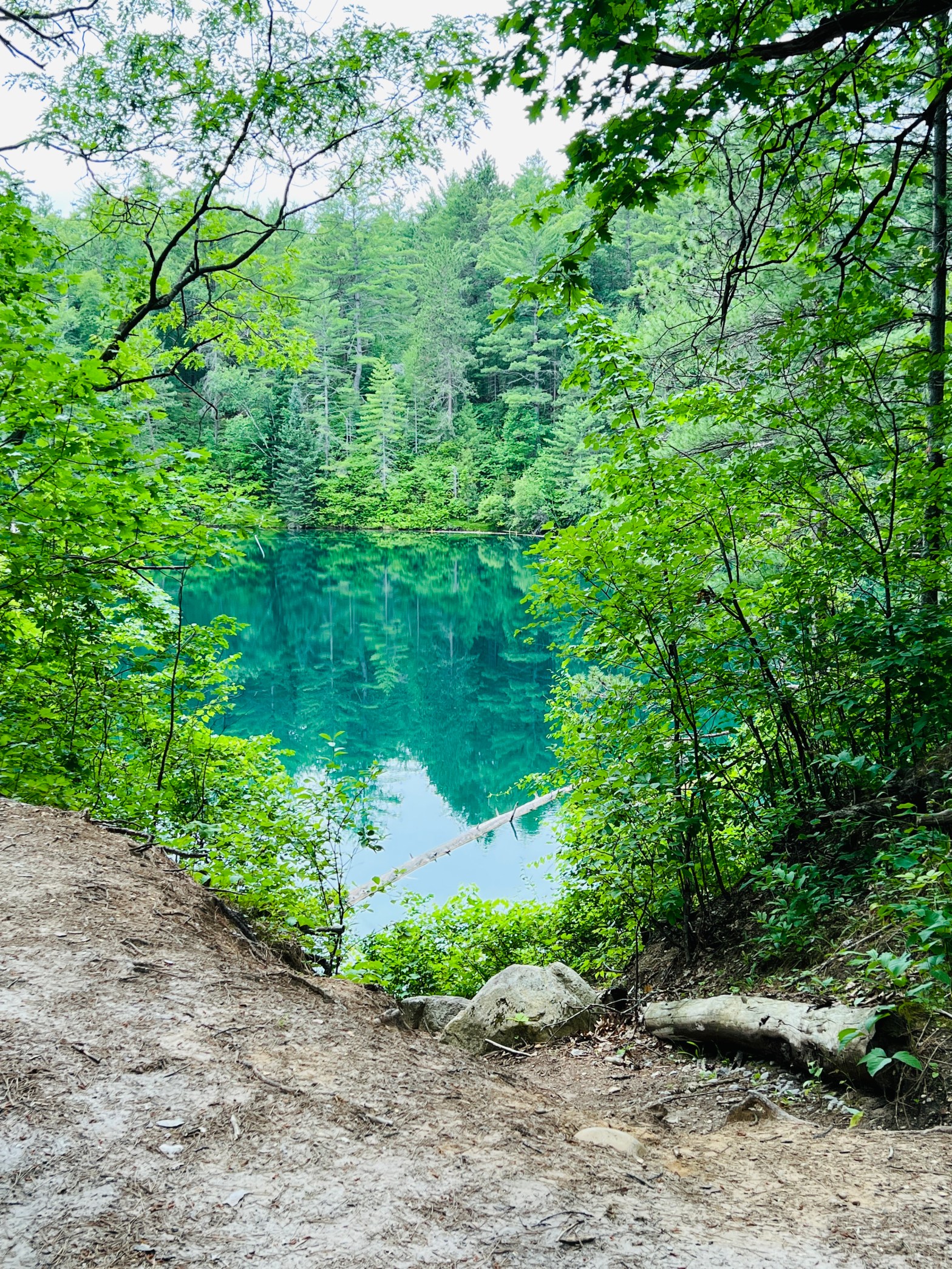
The next morning, our destination was a beautiful glacial kettle lake located on the Shingle Mill Pathway. Based on past hikes, I knew there was a great place to camp about a quarter mile from the lake, and I was looking forward to swimming in its gorgeous turquoise water. We only had a four mile hike to reach this destination, so we took our time, stopping to play in the Pigeon River as we passed through the Pigeon River State Forest Campground. One of the things that struck me about this group of kids was that they really focused on their surroundings and how their gear was performing as we hiked, rather than playing games or singing songs as we traveled. While the latter activities can be a lot of fun, they also diminish chances of seeing wildlife, and definitely alter the peaceful atmosphere I’m used to in the woods, so I was thrilled that their choice was to enjoy their surroundings.
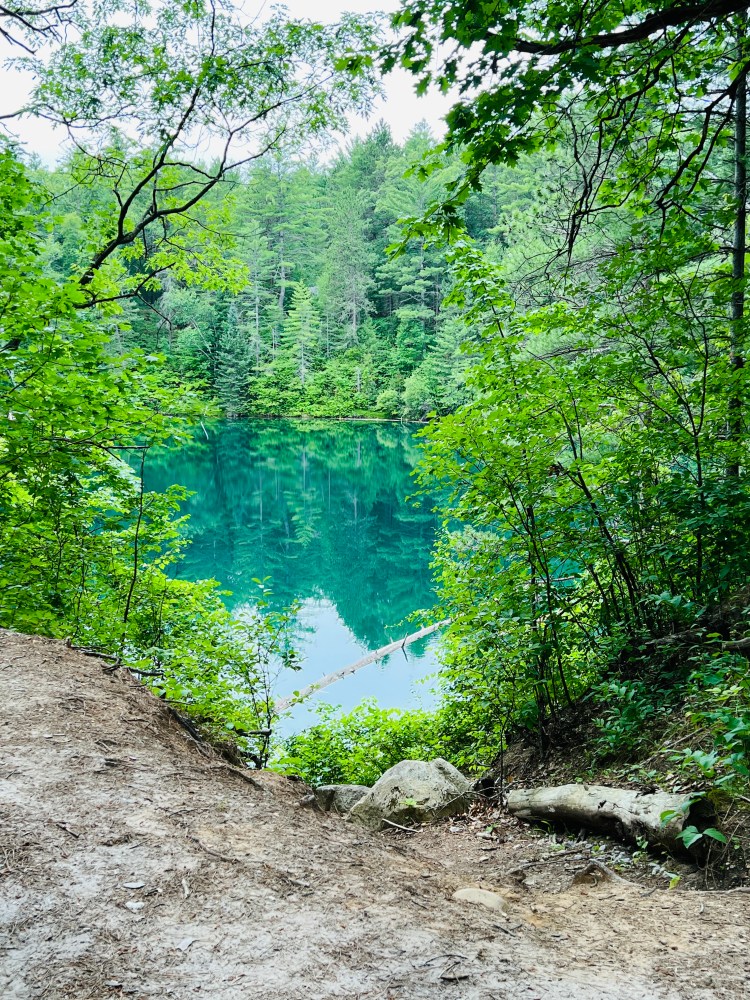
“Whoa… that’s amazing.” First reactions to the glacial kettle. We cooked lunch in a nearby clearing, and spent a good hour or two swimming. The submerged fallen trees were creepy through the crystal clear water, and the water was cool and refreshing. Some of the kids enjoyed trying to balance on a floating log and coordinate synchronous dives, while others splashed in the shallows. The lake got deep very quickly, so we had to be careful about that. (I am a lifeguard and had given them a swim test earlier at camp, so I could manage their level of skill to the setting.)
After swimming, we hiked on so as to be a legal distance from the kettle, and set up camp in a well-used site. Some campers lounged in hammocks and read, others sketched, a few played cards, and we also completed camp chores, such as hanging bear bags and filtering water. Hiking the short distance back to the kettle to collect water turned out to be a treat, as the lighting and reflections seemed to improve each time. We had a peaceful night in camp, and watched the stars turn bright. It rained gently overnight, but stopped a couple hours before dawn, and we woke to dry tents and ground. Several of the kids noted how lucky that was, and I was reminded that backpacking really does make you appreciate simple things.
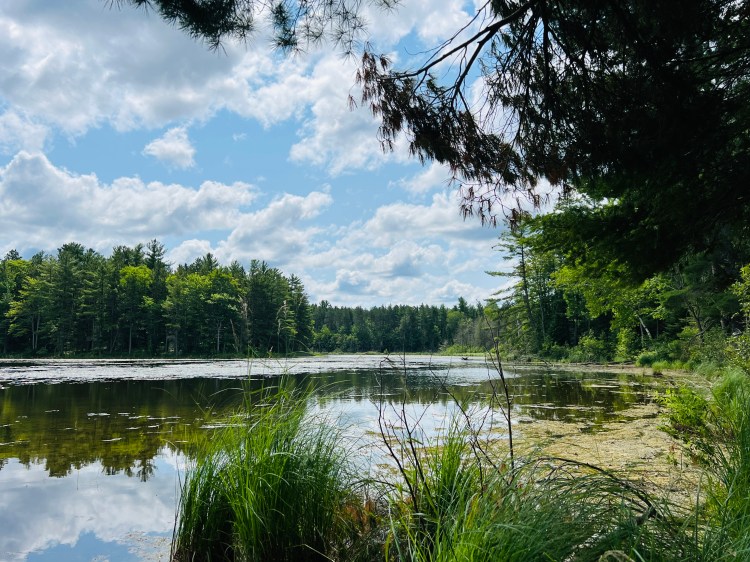
We continued on the 10-mile loop of the Shingle Mill pathway, stopping for lunch at a small campsite on Grass Lake, which has a small shrine to someone who must have loved this location. It’s easy to see why. The marshy lake is beautiful, and there is a giant white pine that must be centuries old. How it escaped the loggers, I have no idea, but it’s huge.
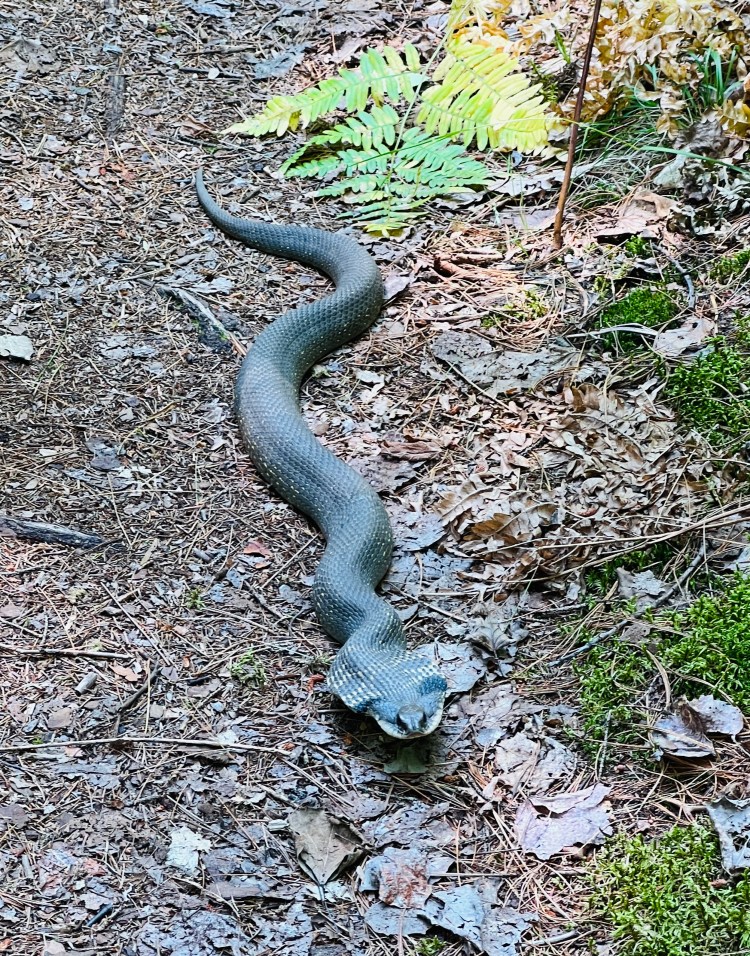
We continued along, and just before entering the cedar swamp that indicates the loop is almost complete, we encountered a large Eastern Hognose snake on the trail. It chose “fight” and flared up its hood and hissed. (They also play dead when threatened, but this one was feisty.) I explained that it was a harmless insect and rodent hunter, and the kids and I took a wide berth around him, so as not to disturb him further. They were fascinated by his defense.
As we entered the cedar swamp, the conversation shifted to talk of Hobbit holes and the Shire, as this area truly is reminiscent of some other-wordly setting. Eventually, we transitioned into the meadows that border the Pigeon River near Sturgeon Valley Road.
Before long, we were waiting for pick up in the Pigeon Bridge State Forest Campground. On the way back to camp, the kids got to experience another great backpacking ritual, the post-hike meal. We stopped in Boyne City and gorged ourselves on BC Pizza. The post-hike shower back at camp was also epic.
This morning, as parents and grandparents picked up their campers, I couldn’t help but glow as I listened to the kids tell their adults about their experiences! They had left their cell phones with their parents when they arrived at camp, had eaten dehydrated meals for days, backpacked at least six miles each day, and dealt with all the challenges backpackers face, but in the end, it was the beauty of “The Big Wild” that stood out to them.
 Exploring Michigan and other cool places