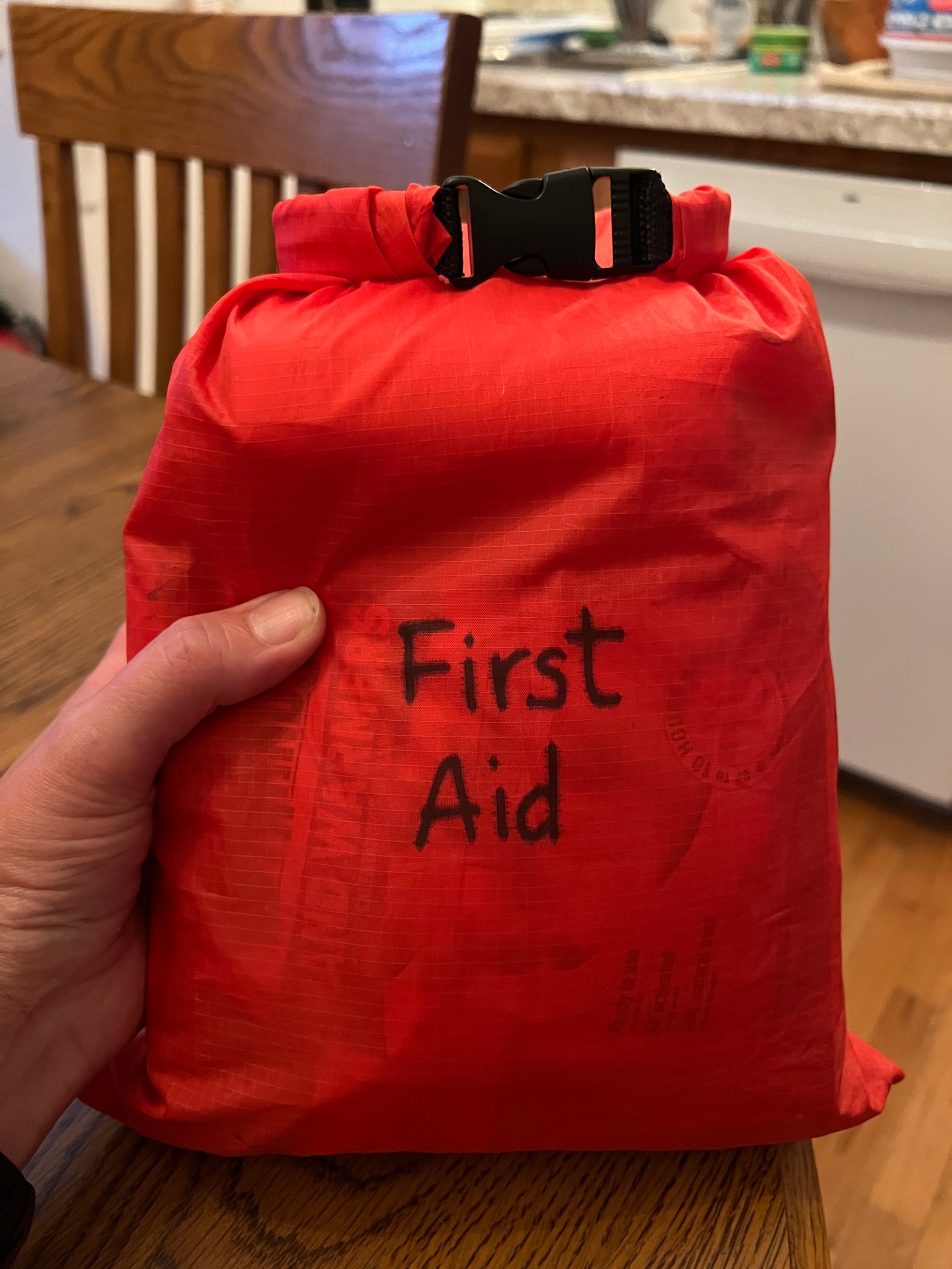
A couple of months ago, I was attending a “10 Essentials” presentation and the speaker showed the crowd one of those credit-card sized first aid kits you can buy that contains a few Band Aids, tweezers, an alcohol wipe and a couple packets of ibuprofen and Benadryl. If all goes well, that might be all you need!
I tend to go a bit to the opposite extreme. Growing up, my family went fishing, hiking, cross-country skiing, and spent weeks at a time sailing Lake Michigan. We got blisters, slivers, sunburns, fell on slippery docks, hit in the face with hot marshmallow roasting sticks… It’s amazing we survived. All of this happened miles from the nearest emergency room or urgent care center, before the Garmin InReach had been invented. So I learned from an early age that it’s good to be prepared.
My first aid kit is laughable to some, it’s so big. But, I stand by my reasoning: I’ve been trained through the National Outdoor Leadership School (NOLS) in Wilderness First Aid, by the American Red Cross as a waterfront lifeguard which includes CPR and first aid, and I know from experience what gets borrowed or bummed by other hikers most often from my first aid kit.
My kit is divided into three main categories: wound care, musculoskeletal injuries, and medicine.
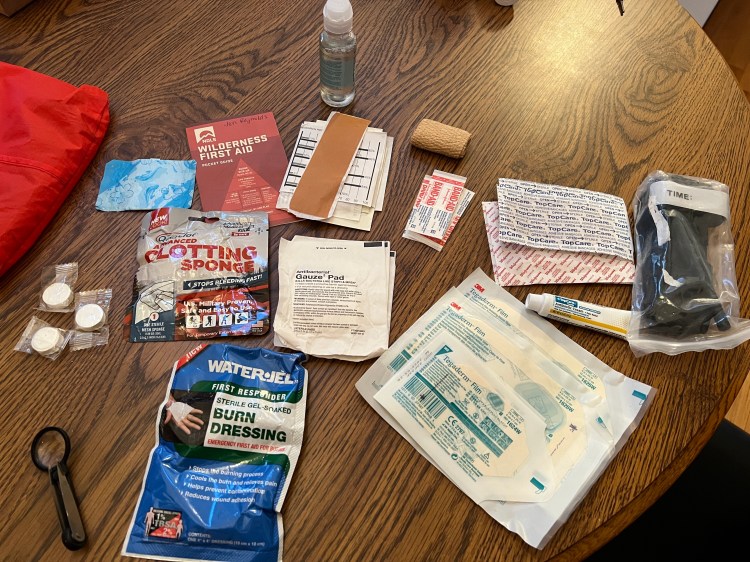
My wound care kit fills a quart size ziploc. It contains:
A mini-wilderness first aid manual
Saline solution to rinse debris from the eye and/or irrigating dirty wounds
Gauze pads and tape to hold them in place
A variety of Band Aids
Tegaderm wound coverings in a variety of sizes (these are waterproof and have a window allowing you to see how a wound is doing.)
Clotting sponge for serious bleeding
Tweezers for removing ticks or debris from a wound
Antibiotic cream
Towelettes (dehydrated into a coin shape–just wet with ¼ cup or so of water and they’re like a big washcloth)
A small sanitary napkin which can be used as a clotting sponge
Burn gel dressing
Leukotape for hot spots/blister areas
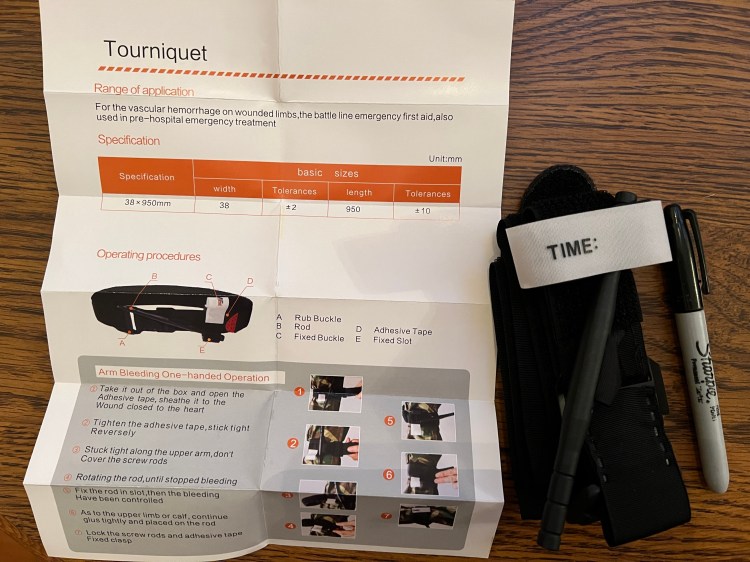
Tourniquet and Sharpie to mark time applied (Unless you have training specific to the use of a tourniquet, it is not advised that you apply one. Because I do trail maintenance where chainsaws are involved, it makes sense to me to bring this, but it’s probably overkill for most people.)
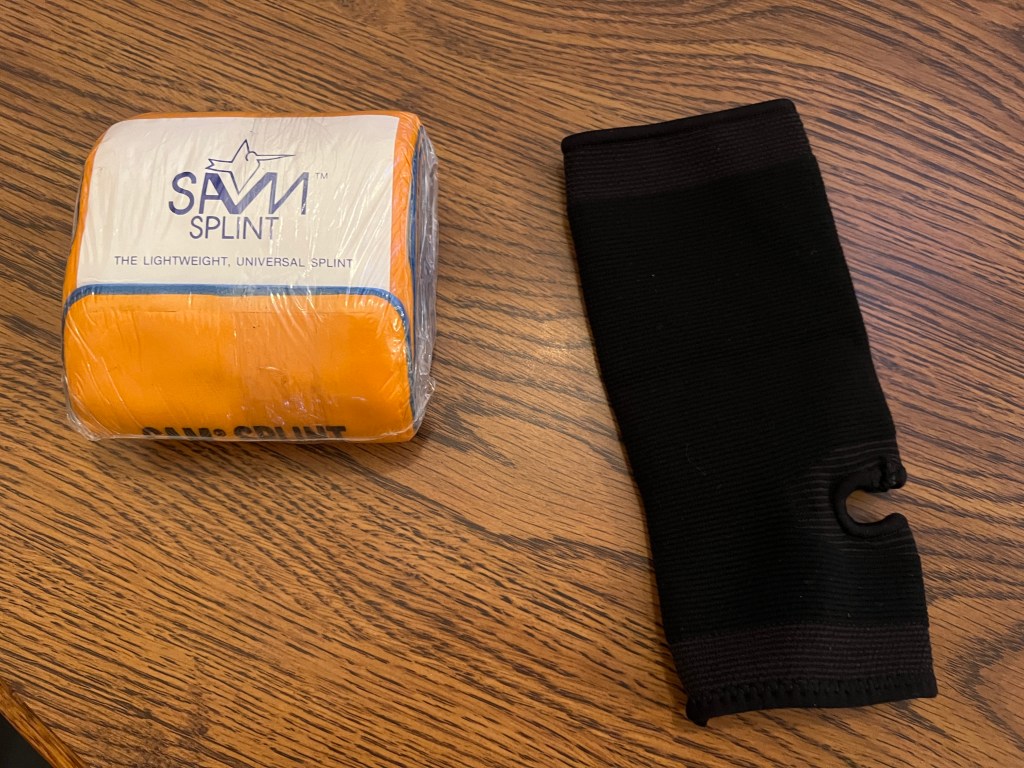
Musculoskeletal injuries:
SAM splint for stabilizing broken bones
Elastic ankle brace for sprained ankles
Bandana for makeshift sling

Medicine:
I carry a small bottle of ibuprofen and allergy meds in my hygiene kit because I need those commonly. The following are items that I do not need regularly, but have been glad to have when they were needed:
Pepto Bismol
Imodium
Cold & Flu medicine
Cough drops
Because they didn’t really fit into a specific category, applicator-less tampons are also in this bag. They make great stoppers for nose bleeds.
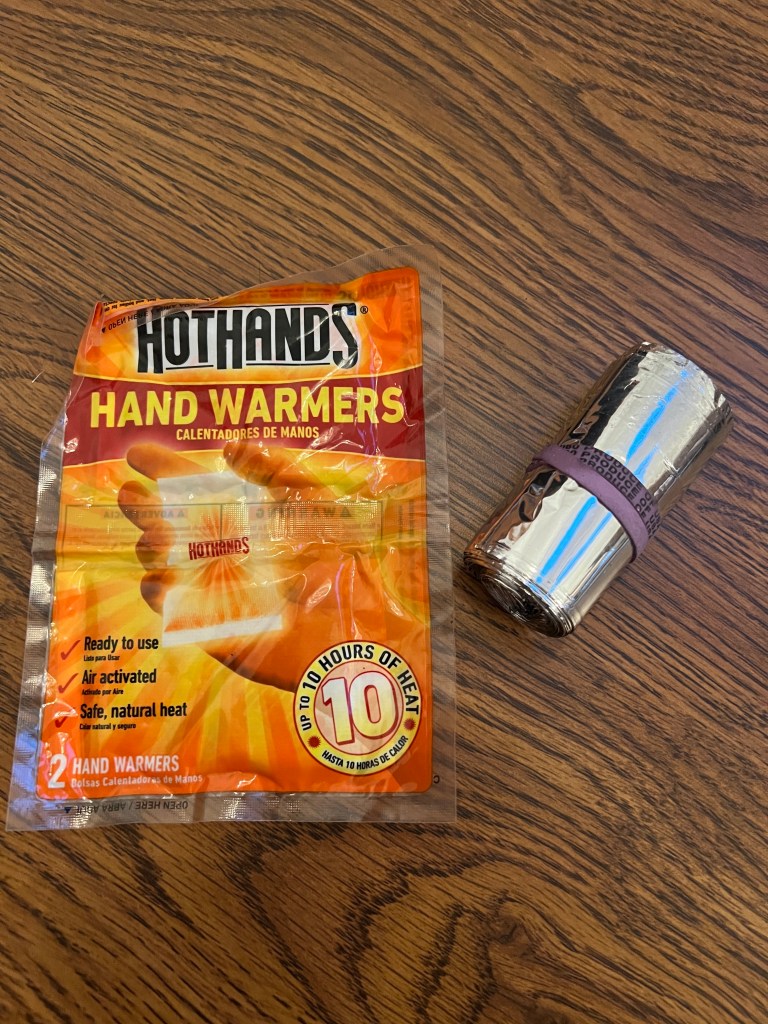

I also carry extra bug spray wipes, a tick key, poison ivy oil remover, some hand warmers, and a mylar blanket.
By far the most commonly used items in this kit have been:
Mylar blanket used underneath the sleeping bag of backpackers who have been cold at night
Ankle brace (twice this year on group trips)
Leukotape for hot spots
Saline solution
Antibiotic cream
Band Aids
Tick Key (In the Trap Hills and Pigeon River State Forest, this key got a workout!)
While this kit may seem like overkill, I have been very happy to have some of these items along. I hope that I never have to use some of them, but I am more comfortable knowing that I am prepared to stablize myself or others in the case of a serious injury. It is by no means perfect, and has evolved as I learn more and have more experiences. I’m sure it will continue to evolve.
 Exploring Michigan and other cool places