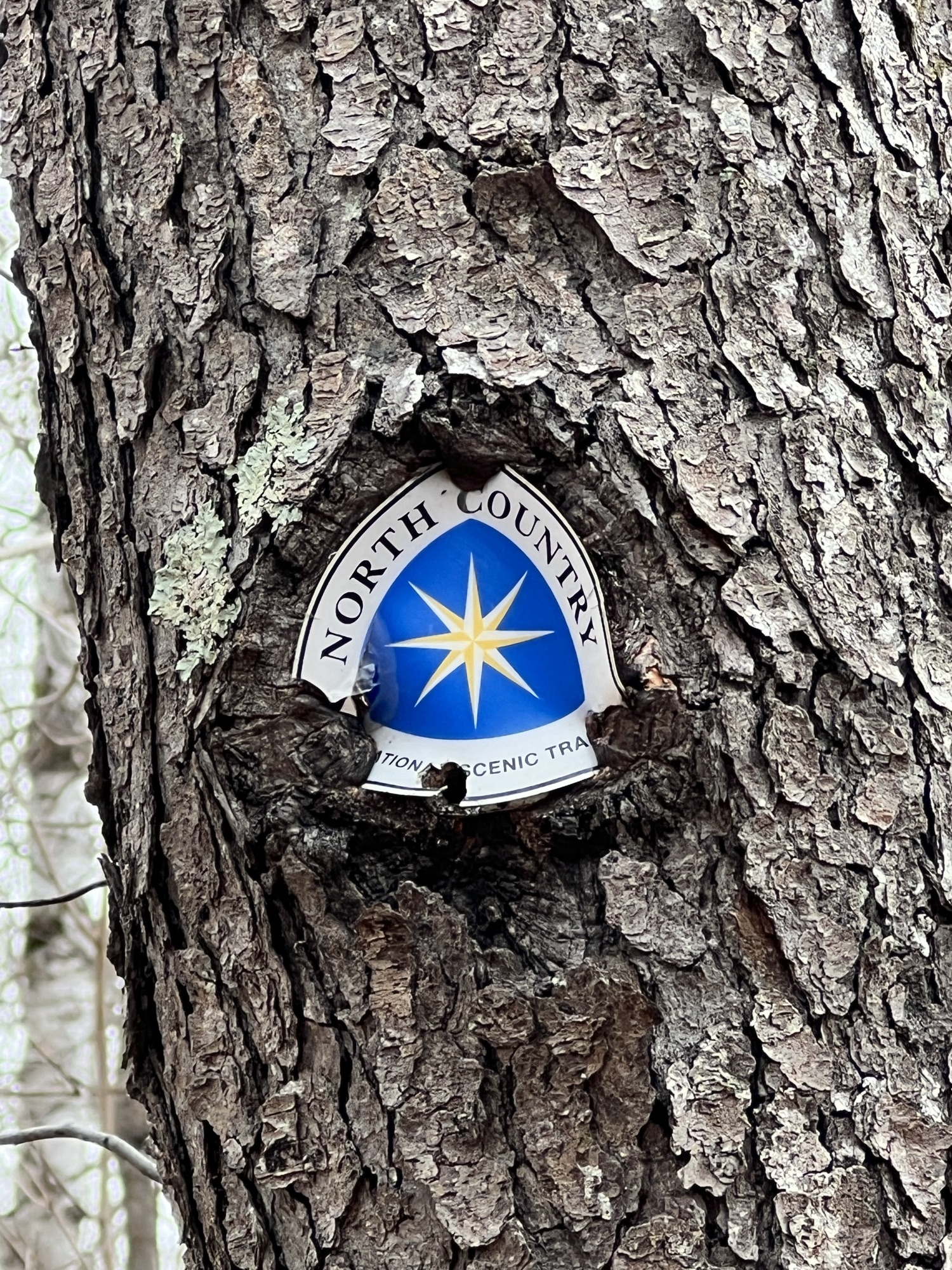
Have you ever encountered a boardwalk or bridge while hiking in the middle of nowhere, and thought to yourself, “How did this get built?” Most of us enjoy our time on trail without too much thought about the infrastructure that keeps our feet dry and our bodies safer from falls through river crossings and muddy areas. This weekend I attended a work weekend hosted by my local NCT chapter, the JV 45 in northwest lower Michigan. This weekend had been in-planning for months, with hopes of tearing down an unsafe viewing platform, repurposing its lumber for puncheon, straightening a sloping bridge, and repurposing a dock for new life over a muddy area. While we weren’t working in the middle of nowhere, the Jordan Valley Pathway loop is known for its big hills. One of the projects was at the bottom of Deadman’s Hill, which meant the volunteers were carrying supplies and lumber down a pretty steep slope with a foreboding name, and having to hoof it back up several times each day!
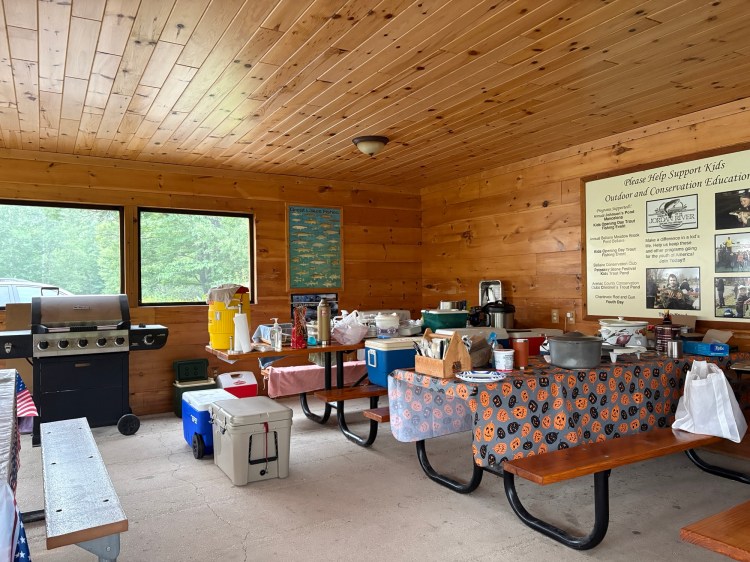
Months ago, I volunteered to help provide food for the crew. I knew that given my lack of construction skills and limited ability to carry heavy stuff, I wouldn’t be much help on the construction sites. Meal organizer Sue, who has clearly done this a few times, recruited a team of volunteers, worked out a menu, and hosted several group phone calls to plan out the weekend. I spent a few hours in the kitchen at home baking cookies and other treats to contribute to the food effort. It was happy work. The Jordan River Fish Hatchery kindly allowed us use of a screened-in picnic room, and allowed us to camp on their property, so we would be in close proximity to our worksites.
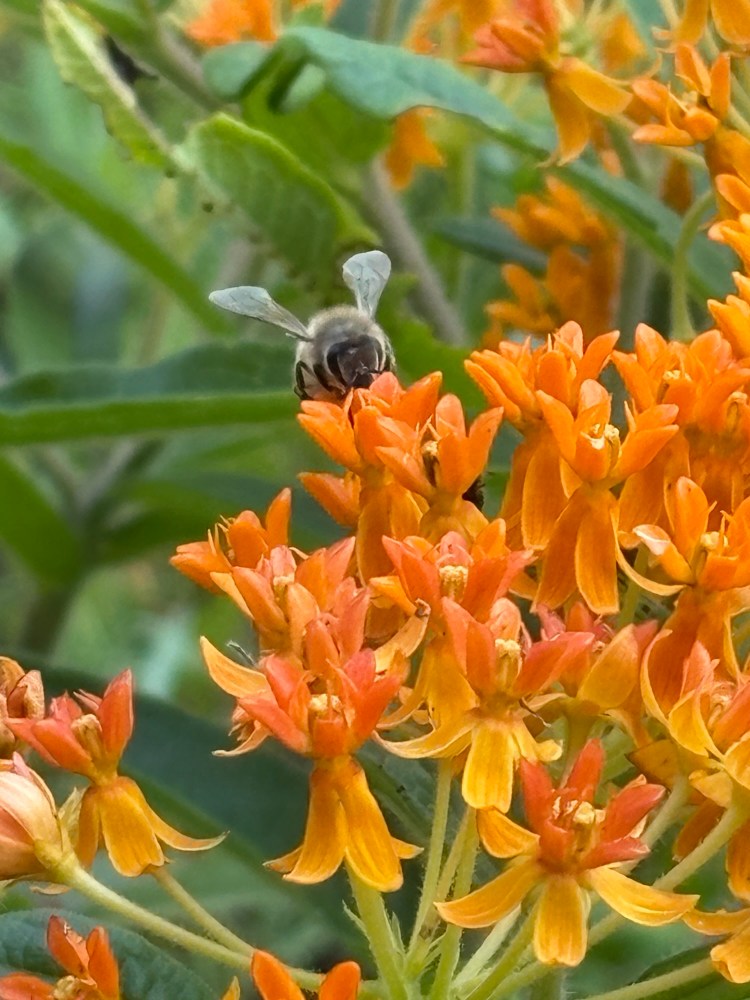
Volunteers began to roll in Friday afternoon for lunch, in spite of the terrible air quality from the forest fires. We wore our N95 masks and discussed our options. Some of the crew decided to head out to the work sites to move some materials and scope out the projects, while some of us stayed back at camp, taking it easy and getting to know each other. We ate dinner together, admired the beautiful pollinator beds the fishery staff maintains, and headed off to bed, hoping the rain in the forecast might help to quell the wildfires and improve the air quality.
Sleeping in a tent during a torrential rain is no easy thing. It rained, thundered, and blew a bit on two separate occasions overnight. My one consolation was that there were no big trees nearby to fall on me or get struck by lightning. My tent stayed relatively dry, except for a little rain that came in through the screen at the top of the door, but the rain was so loud that it was impossible to rest much. I know some people use ear plugs, but I just can’t get comfortable with the idea of blocking out the sound of what might be coming to kill me while I’m sleeping outside. Overly dramatic? Perhaps.
By Saturday morning, the rain had pretty much cleared, and the air quality was dramatically better. I woke early and joined Sue at the picnic room, where she already had coffee going. I began making sandwich wraps for the crew’s lunch, and Evelyn, Jean, and Dove arrived to help Sue cook breakfast burritos. As the rest of the volunteers filtered in, hovering around the coffee pots like Oliver Twist asking for more gruel, we rejoiced over the improved air quality. Plans were hatched for who was going where, and everyone headed out, except for some of the cooking crew, who had breakfast clean up and dinner prep to do. Around 11, some of us headed out to deliver lunch in the field.
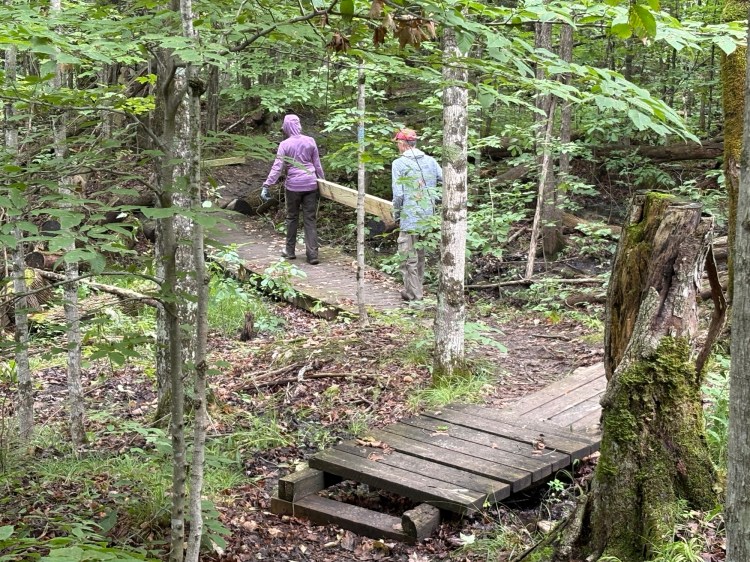
I headed to the Cascade Road location, near the famous “4500 Miles, Only One 45-degree N Crossing” sign, where the tilted bridge was hopefully being fixed. As I began to hike in, I encountered so much mud, and all I could think was, “They carried that heavy lumber over this?!” It was definitely in need of some puncheon, but the bridge was the first priority.
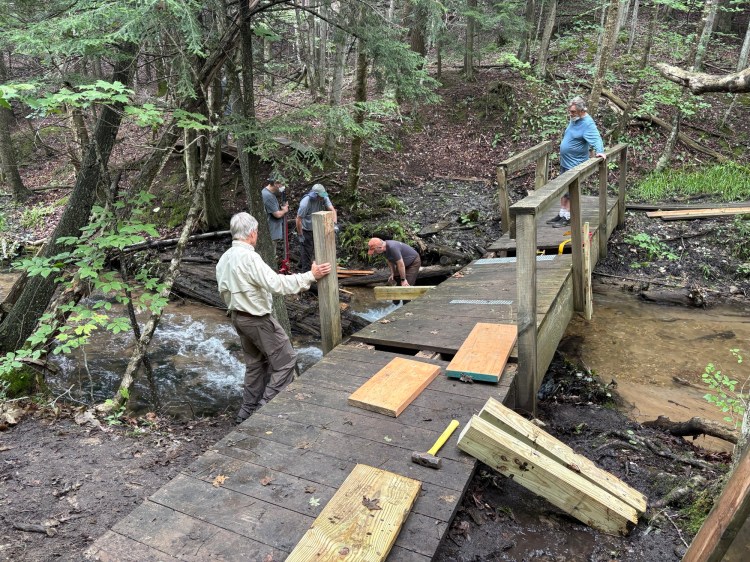
The crew had jacked the bridge level, and were beginning the process of shoring it up to stay that way. I could see the jack they had used to make it level, and wondered how on earth they were going to make it stay that way once the jack was removed. There was much discussion over the proper course to make it so.
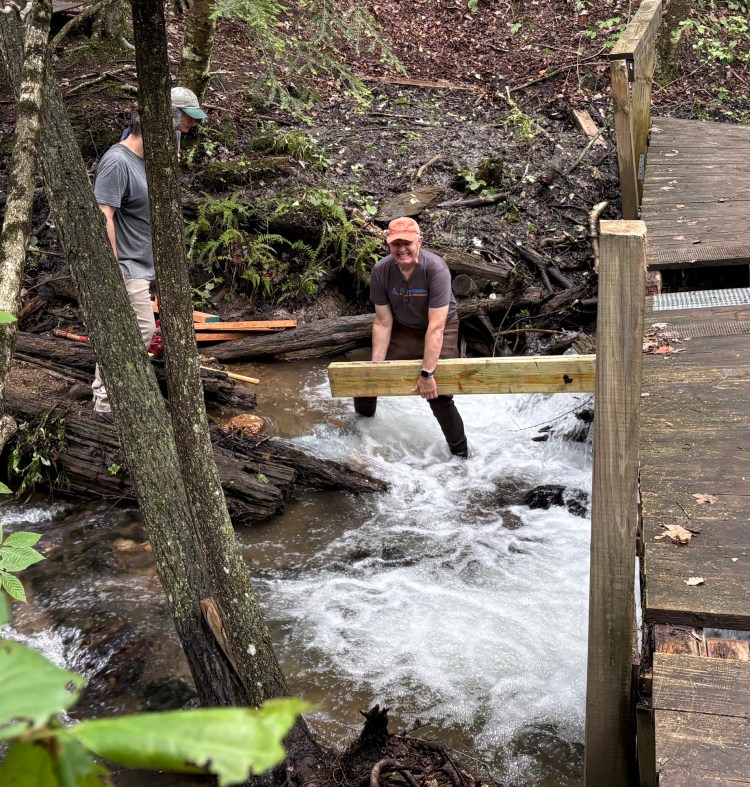
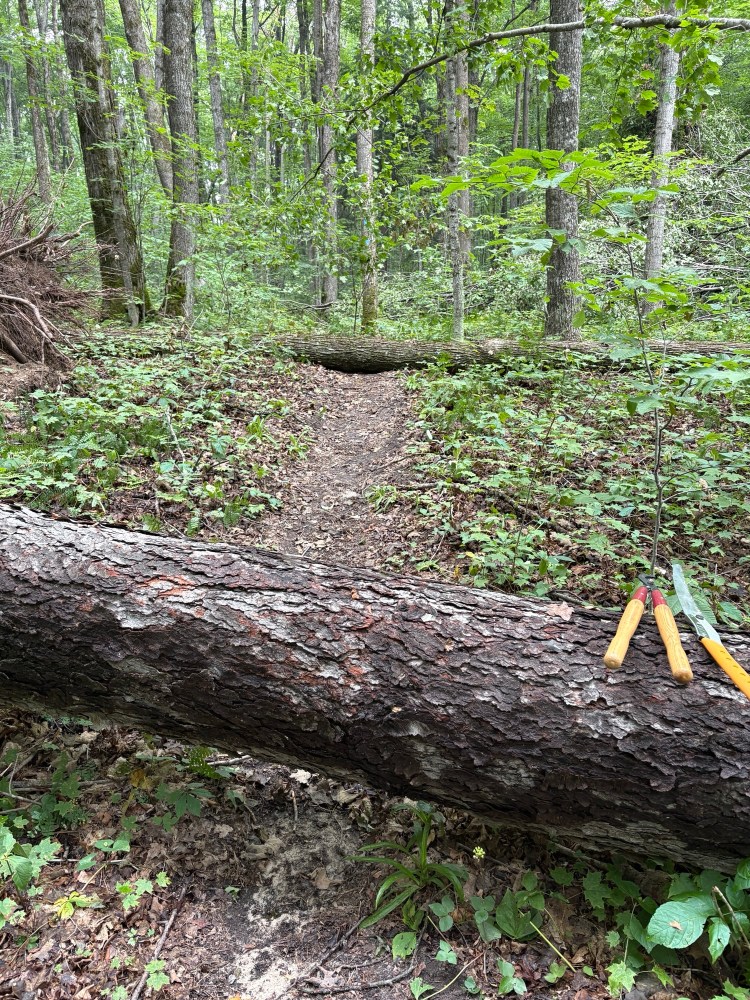
After the crew had been fed, I helped to carry a few remaining pieces of lumber from the road to the construction site, and then went to investigate the trail heading in the opposite direction, lopers and folding saw in hand. Within a half mile, I encountered four major blowdowns. I was able to clear a path around the first so that hikers could easily get around until we cleared the tree itself, the next two were way too big for my folding saw, and the fourth was just the crown over the trail, so I only had to cut big branches, not a trunk, to clear the trail. As I worked, I encountered 5 hikers heading through. I took some photos of the bigger downed trees to share with Dan, the Yoda of chainsaw work, knowing that he could make pretty short work of them tomorrow.
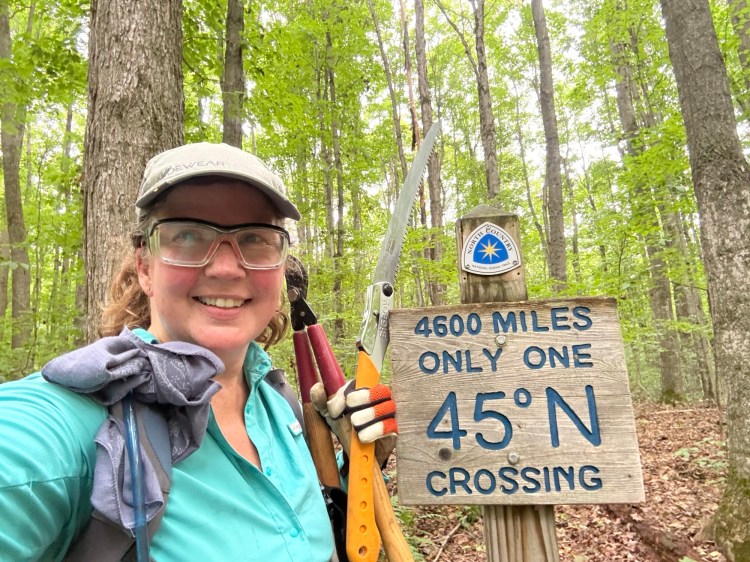
I headed back to camp to help prepare dinner, and the kitchen crew was joined by the trail crew around 6. While some sat out and played cribbage after dinner, others headed immediately to bed. With no rain and thunder, I slept more peacefully overnight.
Sunday morning was pretty much a repeat of the day before, with respective crews heading out to their locations. But, I would be remiss if I didn’t mention the pretty flowers Dove brought from her garden to spruce up the tables at breakfast. Jim, Maureen, Dan and I took a quick detour to work on the downed trees–Dan being the sawyer and the rest of us acting as swampers, cleaning up what he cut and getting it out of the way. Jim and Maureen had just cleared this section of trail a couple weeks ago, so they were quite surprised by the amount of downed trees in such a short length of trail.
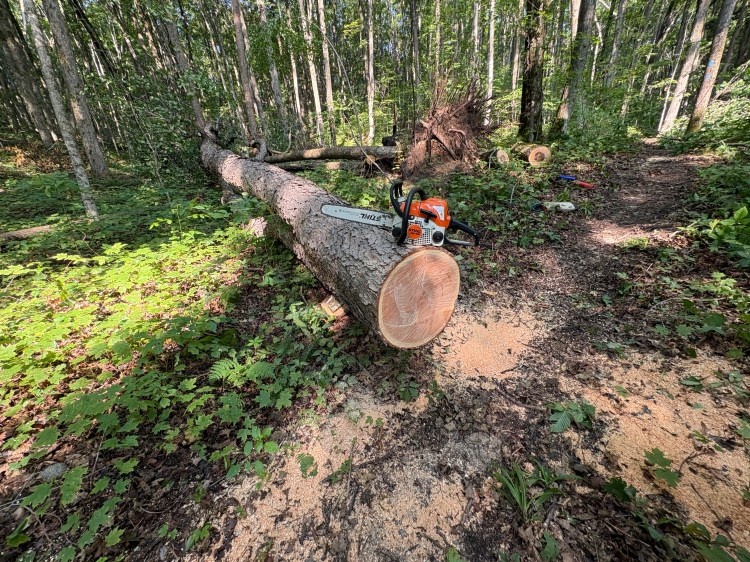
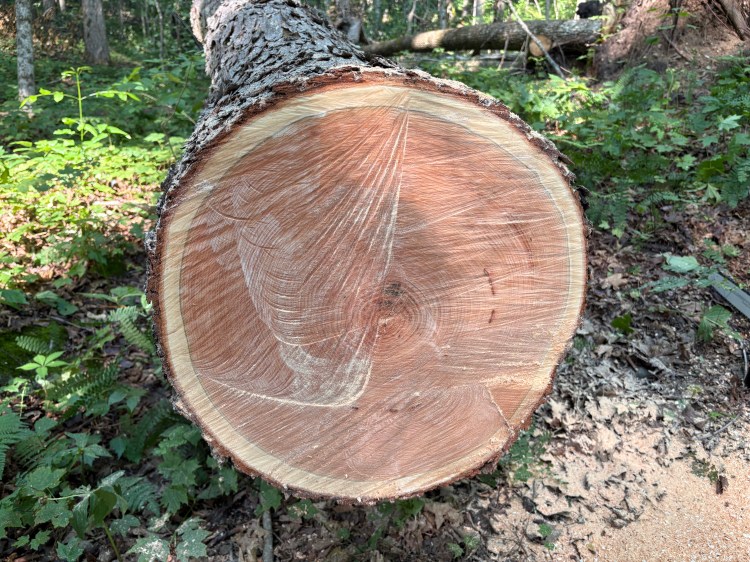
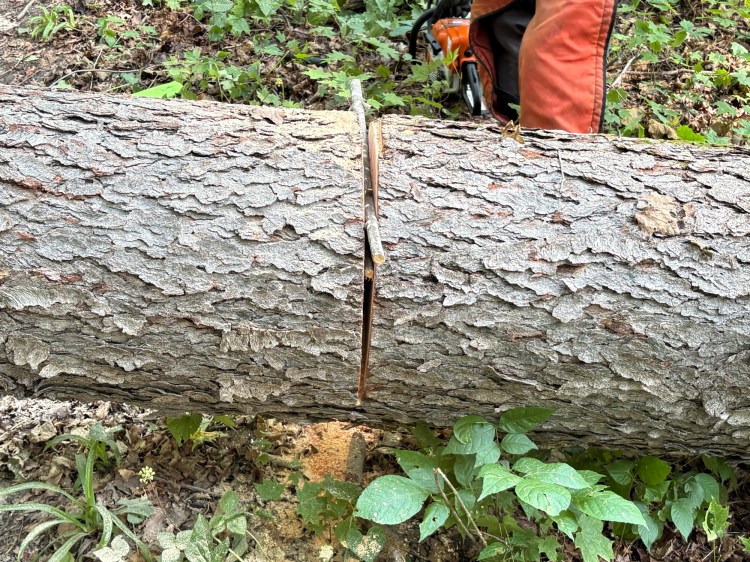
One of the trees was a bit tricky–it was a large cherry that split into a double trunk about halfway up. It had lodged in several other trees, coming to rest about six inches over the trail, creating binds that might make it behave differently than a tree that had fallen directly onto the ground. It was so big that when I had scootched over it the day before, neither of my feet touched the ground as I briefly sat astride it. If it released unexpectedly, there would be power in its movement. Dan mentioned that there was a chance the root end might pop back down after the trunk was cut, but he thought it was heavy enough that it would probably stay put. Dan talked through his plan to cut the trunk to clear a path where the trail passed, strategizing to avoid pinching the bar of his saw. When we ran out of wedges between the two of us, he improvised with some short sections of tree branches from one of the other downed trees to keep the kerf from closing on his saw bar. Eventually, and without incident, he cleared a section of the giant tree from the path so that hikers could easily pass through.
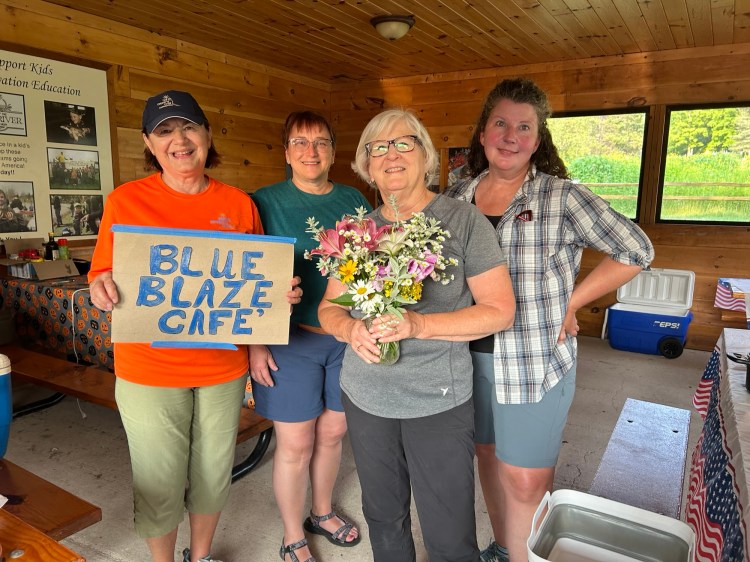
After rejoining the bridge crew and providing them with lunch, I headed back to camp to check in, and then made a quick run home for a most glorious shower, before returning to camp. Evelyn had painted a “Blue Blaze Cafe” sign which she had hung on the door of the screened-in picnic area. Dinner was being brought in by John and Mary, who had deep fried two turkeys, and outdid themselves on sides and dessert, too. We had a very happy crew come dinner time! Some headed home, some headed back to campers and tents, and we settled in for the night.
Monday morning brought the glorious news that we had accomplished what we had set out to. Other than going back to the work sites to admire the finished projects, there wasn’t really anything left on our project coordinator’s to-do list (for that day, anyway–I’m sure he has a list a mile long for future trail improvements.)
After watching in awe as Sue and crew disassembled cooking equipment and handed off the leftover food, I packed up my car and headed out to my own section of NCT to try to get in a little brush cutting while the weather and air quality were conducive, and let my tent dry from the heavy morning dew back at the hatchery before packing up to go home. I have plans to work on my section of trail later this week, but since I was in the neighborhood I thought I could do a quick out and back of the section between Dobleski and 131, which is a little less than a mile, and have a little less to do when I go back in a day or two. There were no downed trees, but the grass had grown knee high under the powerlines, and the raspberry brambles were encroaching on the trail. There were two wide “slides” through the grass and brambles that looked to be about bear-sized, so I began singing loudly and badly when I wasn’t running the brush cutter. I didn’t want to surprise any berry-eating bears, but I’m guessing they could hear me coming from far away.
As I drove home, I reflected on what a learning experience the weekend had been. It’s incredible how many heavy boards, bags of tools, shovels and crowbars, etc. were carried over difficult terrain, how much engineering thought had to go into the projects, as well as sweat equity, and how remarkable it was that a group of some strangers and some friends could come together and work so well as a team. I have found that since going through sawyer training and getting involved in clearing the downed trees from the trail, I study every downed tree with a saw cut I find as I hike, thinking about the strategy that went into the cut, and I’m sure I’ll do the same on future hikes as I traverse the puncheon and bridges constructed by our fantastic NCT volunteers, now that I know a little bit more about what goes into their construction and maintenance.


Nice writeup Jen. The JV45° army marches on its stomach and ours were well filled.
LikeLike
Excellent article, Jen, and thanks for ALL you do for our wondrous trail!!
Ellen
LikeLike