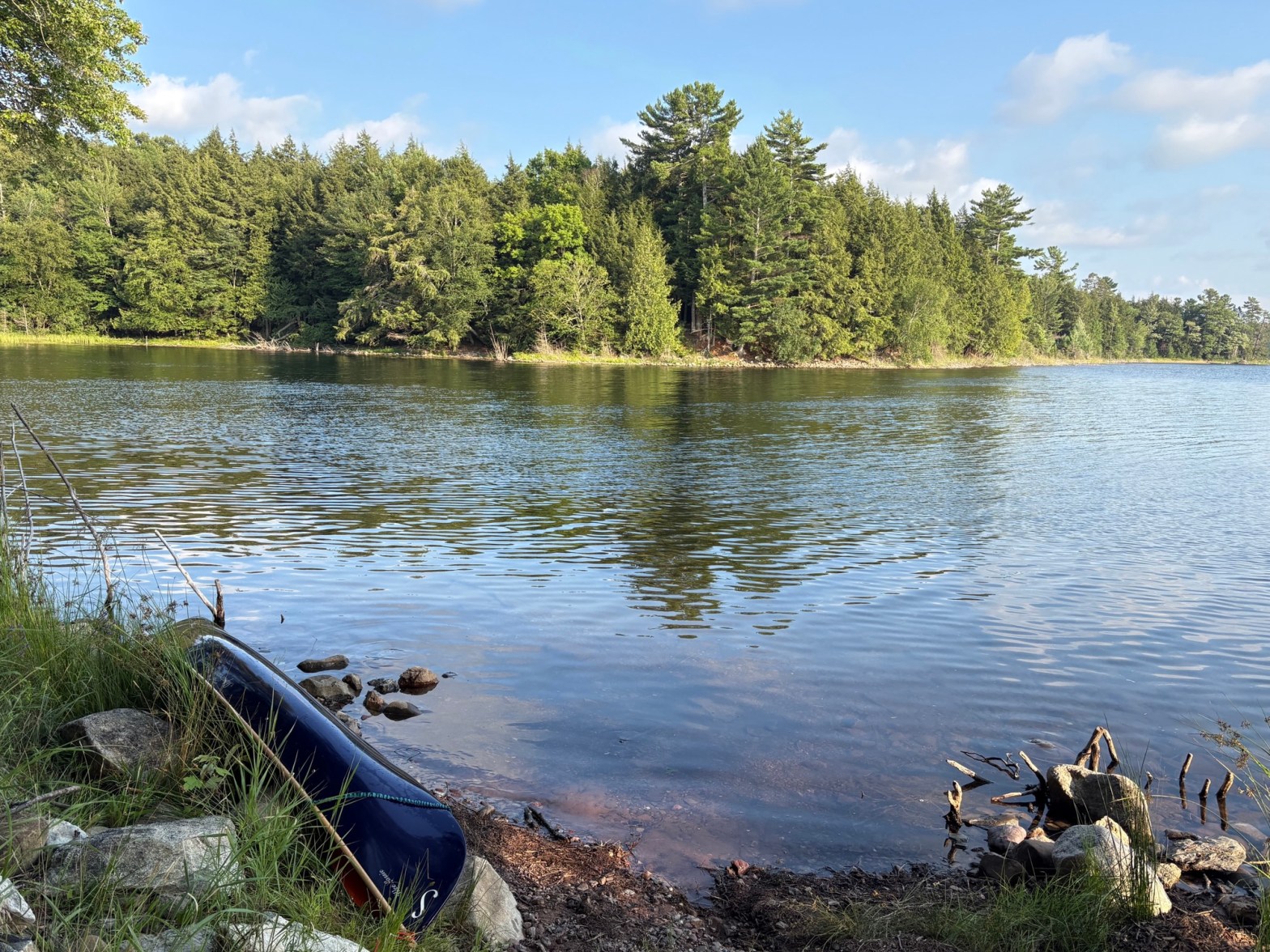
You know a place must be gorgeous when a turn of the century lumber baron buys it, then decides it’s too beautiful to be logged! Thus began the territory known as the Sylvania Club, which was started by Wisconsin lumberman A.D. Johnston, and grew from his 80 acres to an eventual 18,000+ as his wealthy friends bought tracts in the same area, and combined them to create a hunting club. Located in the far western Upper Peninsula of Michigan, this area, now a federally-designated wilderness, contains many small lakes, many of which feed into each other, or can be reached by portage.
I visited this area by kayak several years ago with a few friends, and have been jonesing to go back ever since. This July, my group of six arrived at the Clark Lake campground Friday night, with plans to get paddling in the morning. After our first night, I had backcountry sites reserved along Clark Lake for the rest of the trip, which are accessible by paddling or hiking. There are additional campsites available on the other lakes, but they involve portages of varying lengths.
Our first night felt like typical car camping, except for the frequent sound of loon calls. That haunting, ululating sound always evokes a sense of true wilderness. While loons migrate through the area where I live, they generally vacate as soon as the first power boat hits the water. After a peaceful night’s sleep, we got ready to launch in the morning.
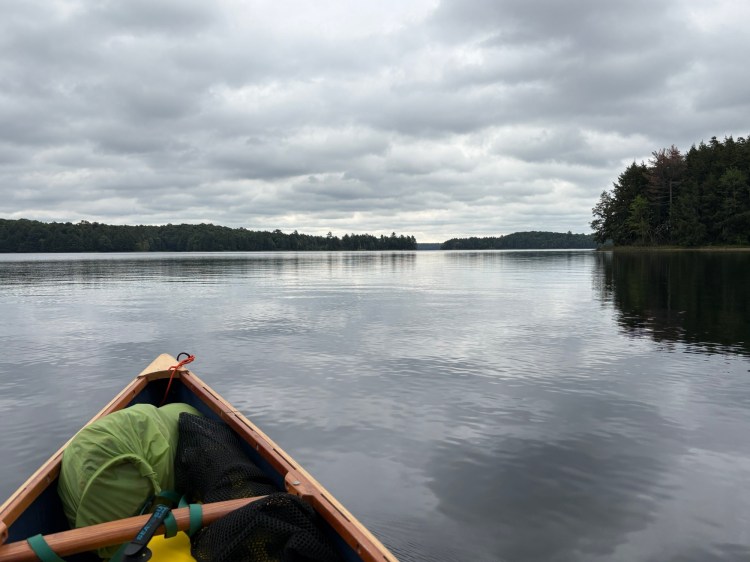
At the Clark Lake boat launch, we prepared our boats, loading them with our gear for the long weekend. We are all backpackers, so this was actually something of a treat, having more space to bring some luxury items. I was trying out a new boat, a 10-foot kevlar Wenonah “Wee Lassie,” a small canoe that is paddled like a kayak, sitting directly in the bottom of the boat in a kayak seat. It only weighs about 20 pounds, making it easy for me to move it around and load it onto my car. The trade off is that it’s a bit tippier than a kayak, which I’ve had to learn to work with.
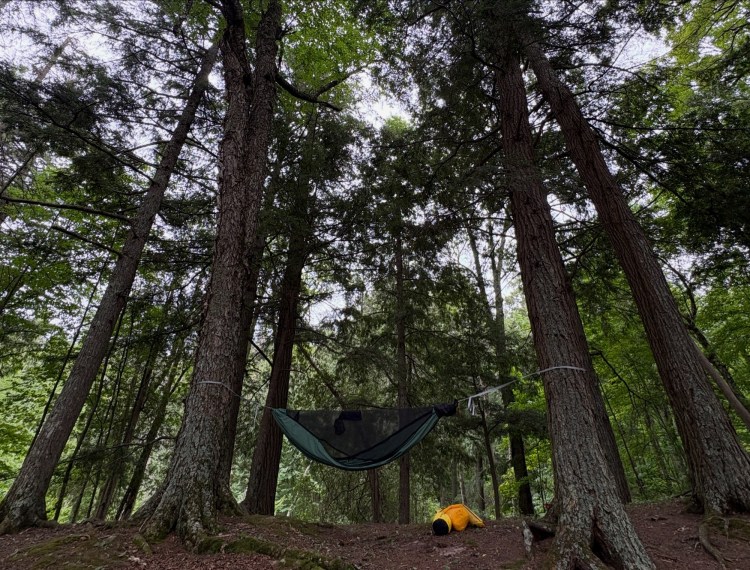
Clark Lake is not particularly large–on a calm day, one could probably paddle the perimeter in half a day or so. Our first campsite, Maple 1, was about a 30-minute paddle from the launch, with an easy, sandy landing. As we unloaded, we began to identify flat spots for the tent-dwellers, and good hammock spots for the rest of us. The trees are so big here that it’s actually a little tricky to find two that are close enough together, and small enough that you can get hammock straps around them. The campsite had a filtered view of the water, which I enjoyed after I set up my hammock and tarp, and had lunch.
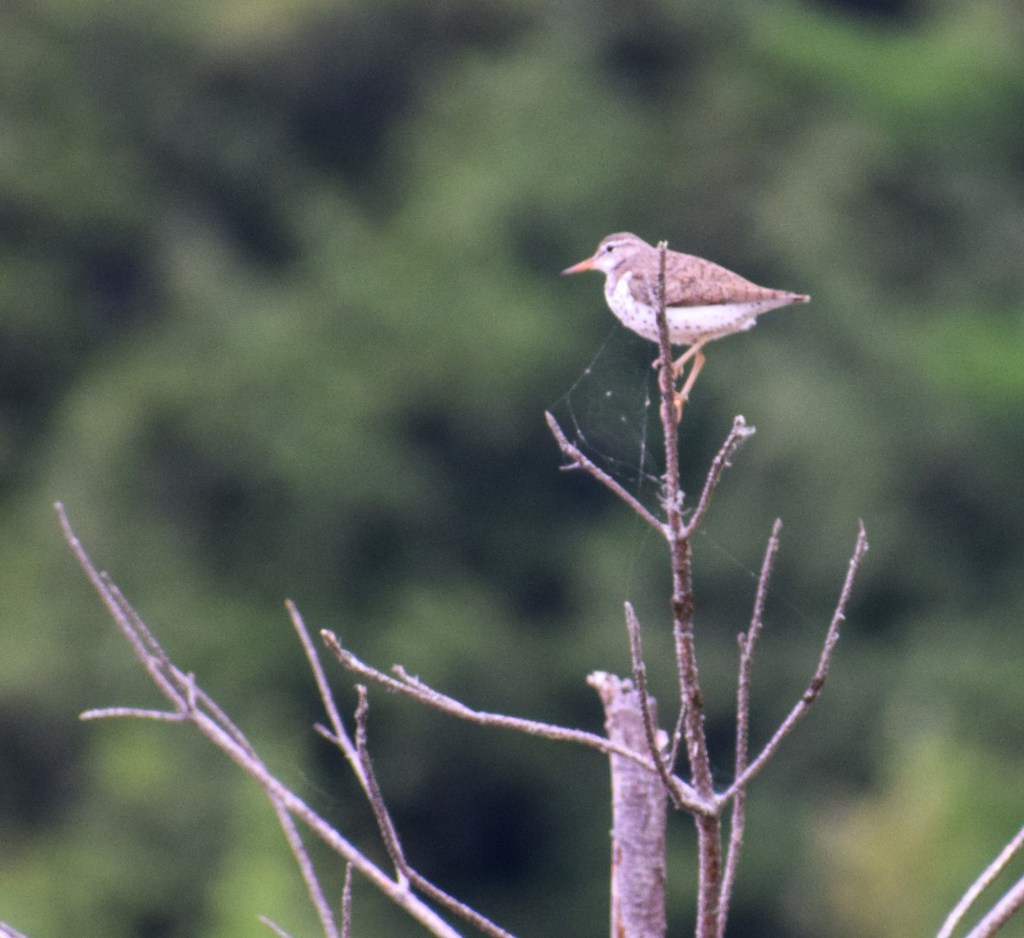
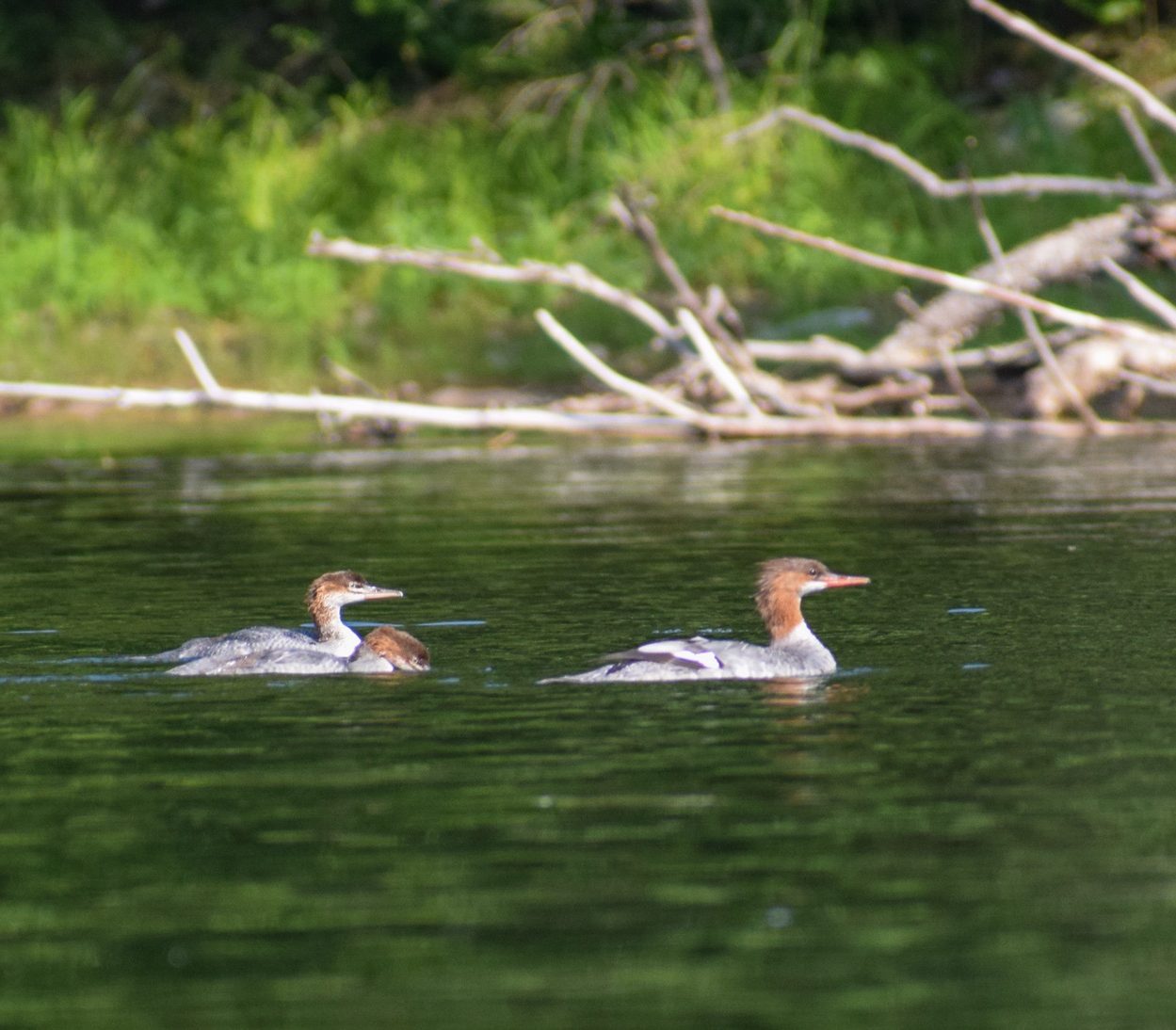
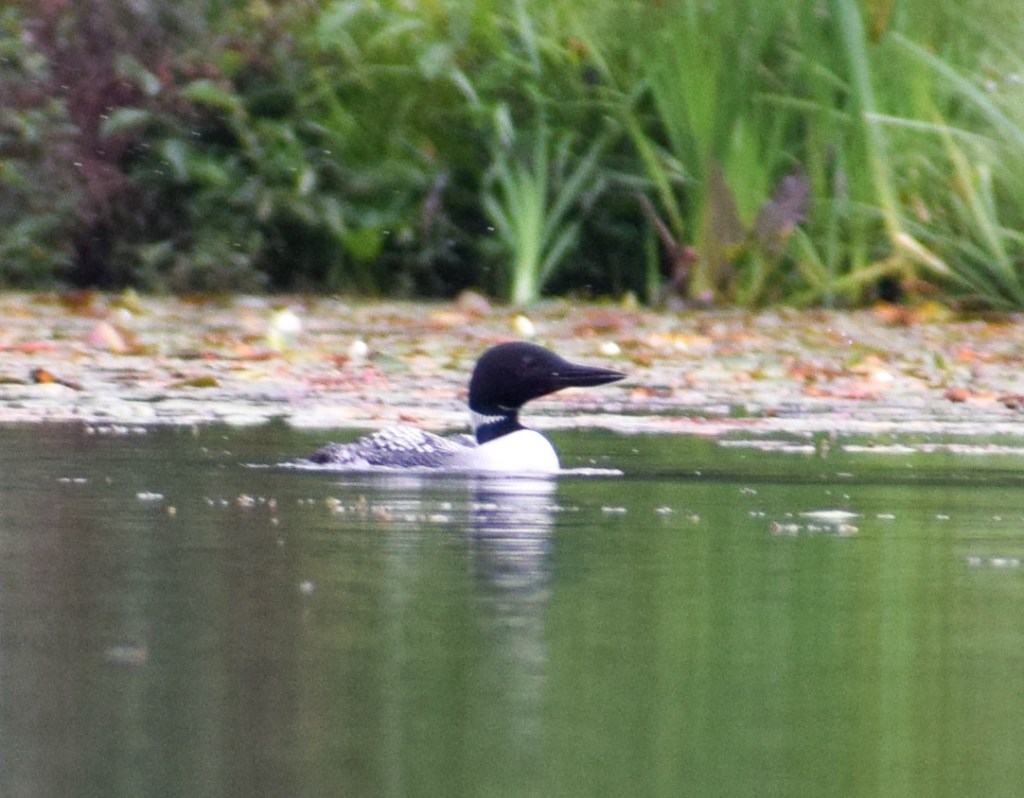
After eating, I decided to go for a swim. The day was warm, and the water was refreshing. While some of the other lakes in the area are covered in duck weed and lilypads, Clark Lake is clear and has a nice bottom for swimming. After drying out a bit, I decided to go for a float in my boat with my camera and see if I could spot any wildlife to photograph. Drew, Karl, and Amy joined me, Amy bringing a set of watercolors so she could paint if the conditions suited her. We paddled around on the still water, noting the rocky shores, merganser babies with their mothers, a loon, and some other, smaller birds. I followed the sound of peeping whenever I heard it, and stayed close to the shore line. Amy had brought several nature guides with her, and her books helped me identify some of the birds I photographed, including a spotted sandpiper. After dinner, we built a fire and enjoyed that for a few hours before retiring to bed.
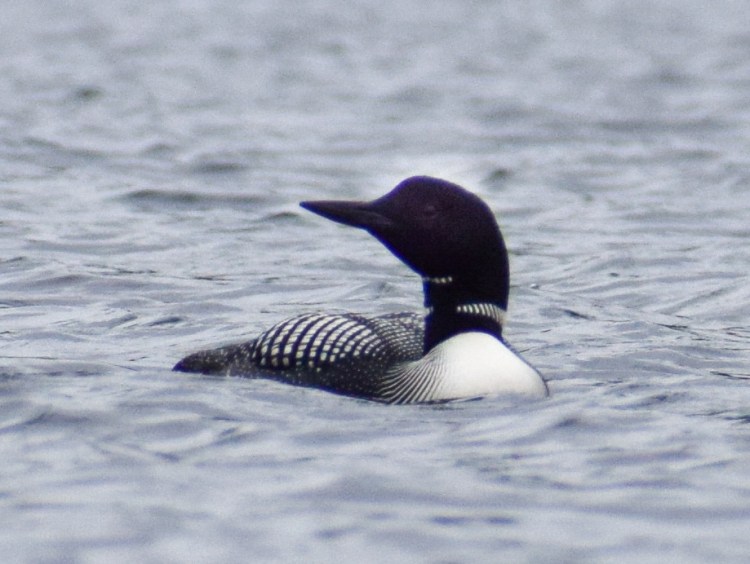
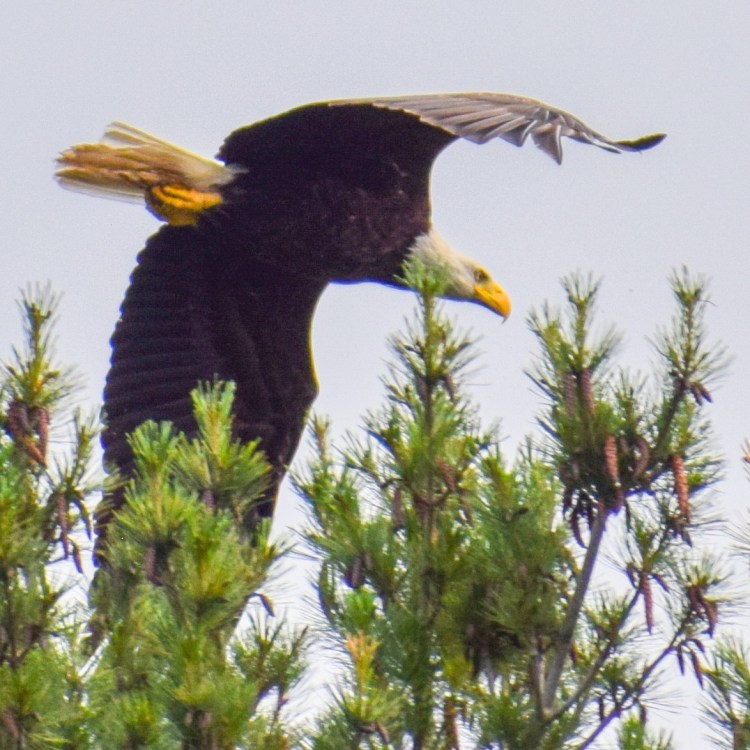
The following day, we awoke to a thick mist. The lake was not visible through the trees, and it was easy to imagine getting lost on the lake, as there were no visual cues from the shoreline. Because we just had a short paddle to our next site, Balsam 2, we decided to wait until the mist burned off before setting out. After a leisurely morning, we set off across Clark Lake, which by then had cleared of the mist. We saw a loon in the same location that I had photographed it the night before, and an eagle up in a pine tree near the small bay that housed our campsite. Even though we weren’t supposed to be able to set up camp until 1 p.m., we discovered the campsite was empty and got our gear moved in.
Because it had been such a short trip to the new campsite, Joe suggested that we paddle to the end of Clark Lake, pick up the portage trail that leads over to Crystal Lake, and explore some of the smaller lakes. Joe and I thought we had done this portage the previous time we were here, and that it wasn’t too long. Neither of us could remember how much distance a “rod” covered, so the information on the map wasn’t particularly helpful. According to the scale on the map, it didn’t look too bad.
After an easy paddle down to the portage path, we unloaded our boats and began the process of moving them. Other than the fact that it’s a bit unwieldy to carry a 10-foot boat on your head through the woods, my portage was relatively easy, compared to those who were carrying kayaks that probably weighed at least 50 pounds. I made two trips, one with the boat and one with my camera gear, first aid kit, water, snacks, etc. The launch into the next lake looked formidable–muddy and covered in duckweed. I wondered how far my feet would sink in if I attempted a wet entry into my boat. I watched as a dad paddled his canoe up to the launch area, and his three daughters carefully walked the length of the boat, stepping off the bow onto relatively stable ground. The dad followed them, as though he’d been standing up, walking the length of a canoe while it was in the water his whole life. Who knows–maybe he had been! Their boat was also a kevlar canoe, so I knew it didn’t have the weight to provide much stability. If they could do it, so could I, I reasoned, at least on my return. Walking down the stern and trying to get into my kayak seat sounded unwieldy, so I attempted to get in from the side, but needed a push off from my friends. At least I didn’t end up in the muck!

The waterscape was dramatically different on Crystal Lake–lots of lilypads, small islands, and zero sandy beaches. The shoreline was rocky, or reedy, and there was a general sense that this area was more wild. I’m guessing the portage keeps some people from heading this way, although we did encounter several groups of people along the way.

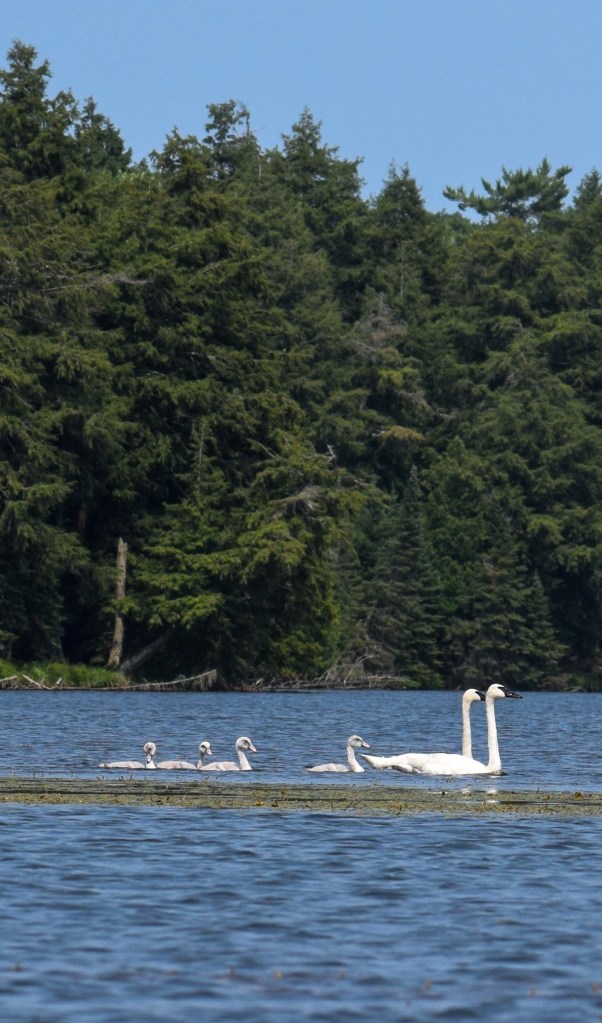
We paddled along the lily pads, encountering a family of trumpeter swans. Waterbugs zipped over the surface of the lake, and dragonflies of all sizes and colors alighted on the flowers, and upon us. Logs that had fallen into the water served as sprouting grounds for moss, grass, reeds, and even wild irises. I paddled just enough to keep moving a little, soaking in the beauty of this special place. Eventually, half of the group decided to head back, but Joe, Kris, and I weren’t ready, so we continued on, finding a little peninsula to pull ashore and have a late lunch. (I was resolved to eat my food and drink my water so I wouldn’t have to carry it back across the portage!)
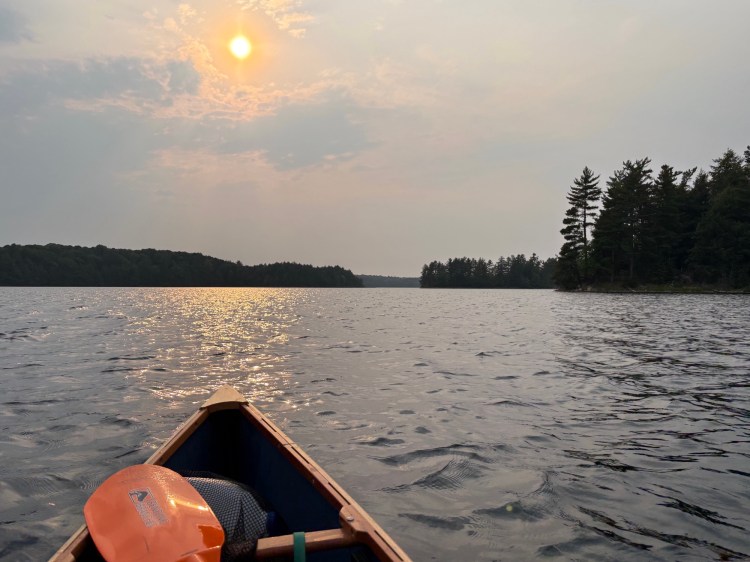
Eventually, the afternoon became late enough that we decided to head back. After the portage, we swam in Clark Lake to rinse off the sweat and duck weed, then began the paddle back to Balsam 2, battling a bit of a headwind. Amy’s dad had contacted us earlier in the day to say that storms were expected, so we had been keeping an eye on the sky, and the wind felt like a portent of things to come. We had a nice paddle back to camp, though, and had dinner, a fire, and went to bed without incident. Amy, Drew, and Karl planned to leave in the morning, and then it would just be three of us. All night, the wind blew, and I kept waiting for a storm to hit. I was able to pull up a radar app on my phone and see that the majority of the weather was heading north of us, and that we would likely make it through the night with just some wind. I slept more easily after that.
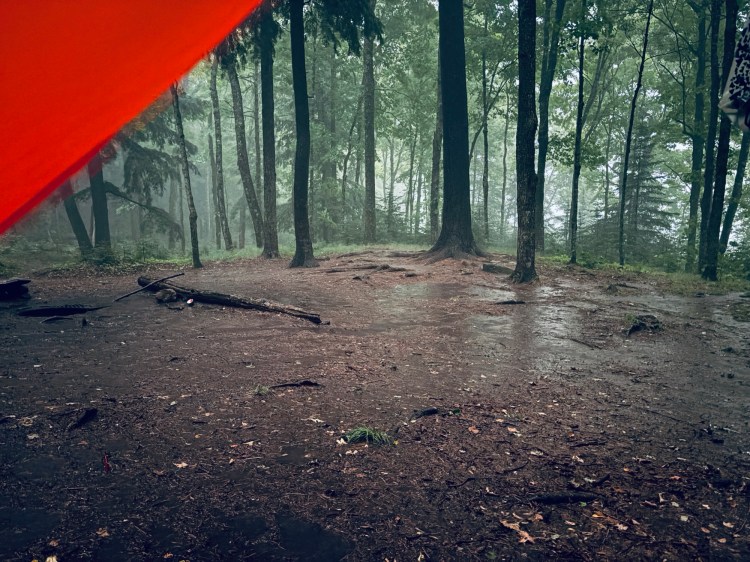
In the morning, we ate breakfast to the sound of distant thunder. The group of three packed up to go, hoping to beat any incoming weather. Not long after they took off, the wind picked up, the thunder became louder, and occasional strikes of lightning became visible. They texted us to say they had pulled off the lake to take cover. Joe, Kris, and I hunkered under a tarp as the rain pelted down. Our phones began to blow up with “take cover” warnings, as hail and high winds were expected. We began to grow damp from the mist created by the wind and the rain, but were grateful that the hail never arrived, and that none of the large, swaying trees fell. The trail leading down to the shore looked more like a stream, and the firepit overflowed with water. The sky grew dark, and it was hard to believe it was 9 o’clock in the morning, when it should have been bright. The storm passed on without incident, although I later learned that the power had been knocked out at the Clark Lake campground due to some fallen trees. We decided to let our gear dry a bit, then head to the next campsite, Ash 1.
Our next campsite was up on a bluff with a nice breeze. It was ideal for drying out our damp gear, so we set up, had lunch, and then spent a lazy afternoon napping and reading. Eventually, we decided we should do some paddling, so we headed out onto the lake, mindful of the stiff breeze that would provide a challenge if we floated too far downwind. We made our way back over to Balsam 2, in the hopes of seeing the otters that Amy, Drew, and Karl had spotted when they left Monday morning, but no luck. We paddled across the lake over to Maple 1, where we spent our first night. Some gray clouds began to gather quickly, and the breeze picked up. Waves began to build, and the wind changed direction. I called to Joe and Kris that I thought we should head back to camp, and began paddling in that direction, the waves hitting my boat head on. I wondered if we should just head to the near shore and wait the wind out, but I was worried that the wind would continue to build and we would be stranded. It was too difficult to have a conversation amongst us, as we had kind of spread out in the bay. (A lesson learned for me: stay closer to your people. I didn’t want to turn in the waves and head back toward them, for fear that being parallel to the waves might swamp my boat.) So, I began to paddle at a 45-degree angle to the waves, heading high of where the campsite was located. I hoped that as I neared the far shore, I could angle back to be more on course, and the waves would be smaller as I got closer to land. I was reminded of taking tacks on a sailboat, rather than trying for a direct course. We had quite a workout, but ended up safely back at camp. Our “leisurely evening paddle” had turned out to be a little more than I had bargained for. We changed into dry clothes, had dinner, and attempted to watch the sunset, but the mosquitoes had other plans, so we ended up in bed early.
Tuesday morning I had no desire to leave my hammock and pack up. Joe and Kris were of similar mind, given that we just had a short paddle back to the launch, and they were only driving as far as Hancock, not all the way home. After loading our boats, we meandered along the shoreline, still hoping to see otters before we left, but no luck. Upon arriving at the boat launch, we chatted with the women who had been camped near us at Balsam 1 when the storm hit, and the family we had seen playing on the rocks on shore as we paddled Monday evening. The dad gave us a recommendation for lunch in Watersmeet, the nearest town, so we headed that way once we were loaded up.
As we ate lunch at the cafe in the LVD Plaza, we mused over what we had enjoyed most about the trip, and discussed plans for future adventures. I found myself feeling lucky in so many ways: to have the time and physical health to go on adventures like this, to have wild spaces available to the public, and to have friends who are willing to embrace the “Type 2 Fun” mentality.

